Key Takeaways
- Understand pilonidal sinus symptoms and when to seek help from a doctor.
- Explore effective treatment options with a Pilonidal Sinus Treatment Doctor in Ahmedabad.
- Learn about recovery expectations and post-treatment care for pilonidal sinus.
- Discover why personalized management is crucial for pilonidal sinus treatment success.
- Understand the symptoms of pilonidal sinus for timely treatment and relief.
Dr. Bhavin K. Baria is an experienced surgeon providing medical and surgical care for pilonidal sinus conditions. A painful swelling near the tailbone can make sitting, driving, working, and even sleeping uncomfortable. What may initially look like a small skin problem can become painful when inflammation or infection develops. Pilonidal sinus is one such condition that deserves proper medical attention when symptoms appear.
If you are searching for a Pilonidal Sinus Treatment Doctor in Ahmedabad, knowing what the condition is and how it may be treated can help you approach consultation with better clarity. Every patient has a different course of treatment. The symptoms, presence of an abscess, recurrence, and extent of the sinus can influence the medical or surgical plan.
What Exactly Is a Pilonidal Sinus?
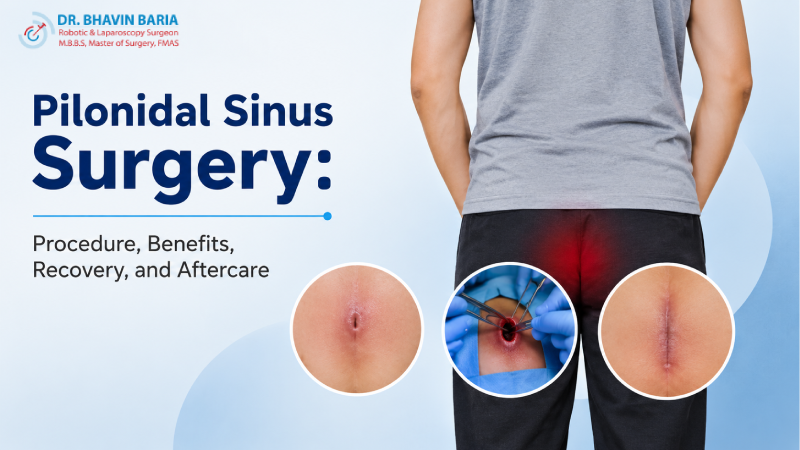
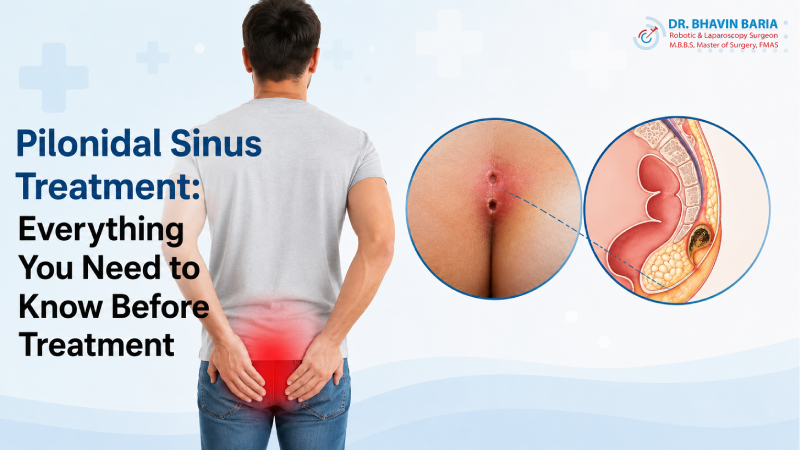
A pilonidal sinus is a small hole or tunnel in the skin, usually found in the cleft between the buttocks near the tailbone. Hair and skin debris may become embedded in this area and contribute to inflammation. When infection develops, the sinus can become painful and may form an abscess containing pus.
Some people may have a pilonidal sinus without noticeable symptoms. Problems commonly become more obvious when the area becomes infected.
The condition can cause repeated discomfort if it keeps becoming inflamed or infected. This is why patients considering Pilonidal Sinus Treatment in Ahmedabad should avoid relying only on temporary relief when pain, swelling, or discharge repeatedly returns.
Dr. Bhavin K. Baria focuses on examining the affected area and understanding the patient’s symptoms before discussing the appropriate treatment direction.
What Are the Typical Pilonidal Sinus Symptoms?
Pilonidal sinus symptoms may develop suddenly during an infection or appear repeatedly over time. Pain around the tailbone is one of the most common complaints, particularly while sitting.
Common signs may include:
- Pain or tenderness near the tailbone
- Swelling in the cleft between the buttocks
- Redness around the affected area
- Pus or blood-like discharge from an opening
- An unpleasant smell from discharge
- Difficulty sitting comfortably
- A painful lump or abscess
- Fever or feeling unwell in some cases of infection
Not every painful swelling near the tailbone is automatically a pilonidal sinus. Accurately identifying the issue requires a clinical evaluation.
Patients experiencing significant pain, swelling, or discharge should seek medical advice rather than squeezing, puncturing, or repeatedly pressing the affected area at home.
Why Does a Pilonidal Sinus Develop?
The exact process behind pilonidal disease can vary, but loose hair entering or becoming embedded in the skin is commonly linked with the condition. Friction and pressure around the cleft between the buttocks may contribute to hair penetrating the skin and triggering an inflammatory response.
Certain factors may be associated with pilonidal disease, including prolonged sitting, a deep buttock cleft, coarse body hair, and repeated friction in the affected area.
This explains why the problem may be particularly uncomfortable for people who spend long hours sitting for work or travel. However, having one or more associated factors does not mean a person will definitely develop the condition.
A consultation with a Pilonidal Sinus Treatment Doctor in Ahmedabad can help distinguish pilonidal disease from other skin or soft-tissue conditions affecting the same region.
Can Pilonidal Sinus Heal Without Treatment?
A pilonidal sinus that is not infected and causes no symptoms may sometimes be managed with observation and advice from a healthcare professional. When an infection, prolonged discharge, discomfort, or recurrent flare-ups occur, the situation shifts.
An infected pilonidal sinus can form an abscess. This collection of pus may become intensely painful and can require drainage. Recurrent or chronic disease may need a different treatment approach.
Temporary improvement does not always mean that the underlying sinus has disappeared. Symptoms may settle and later return in some patients.
For this reason, Pilonidal Sinus Treatment in Ahmedabad should be planned according to the current condition of the sinus rather than assumptions based on temporary pain relief.
How Is Pilonidal Sinus Diagnosed?
Diagnosis commonly begins with a medical history and physical examination of the affected area. The doctor may ask when the symptoms started, whether discharge is present, and if similar problems have occurred previously.
The appearance and location of the sinus openings can provide useful clinical information. The surgeon may also assess redness, swelling, tenderness, and signs of an abscess or active infection.
Patients should tell the doctor if they have experienced repeated episodes. Previous treatment details are also important because recurrent pilonidal disease may require a different plan from a first-time infection.
Dr. Bhavin K. Baria believes that understanding the pattern of the condition is an important part of treatment planning. We discuss the findings and suitable next steps according to the individual case.
How Can Pilonidal Sinus Be Treated?
Pilonidal sinus treatment depends on whether the disease is inactive, acutely infected, or repeatedly causing symptoms. There is no single procedure that is automatically suitable for everyone.
1. Care for an Asymptomatic Sinus
When a pilonidal sinus is not infected and does not cause symptoms, immediate surgery may not always be required. A doctor may provide advice regarding local care and monitoring.
Hair management around the affected region may also form part of medical guidance for selected patients.
2. Drainage of a Pilonidal Abscess
When an abscess forms, pain and swelling can become severe. It might be necessary to make an incision to drain the pus. Drainage helps relieve pressure and treats the abscess.
The need for additional treatment is assessed according to the patient’s condition and the pattern of the disease.
3. Surgical Treatment for Recurrent Disease
Repeated infections, ongoing discharge, or a chronic sinus may lead to consideration of surgical treatment. Different surgical techniques are available, and the choice depends on the extent and complexity of the disease.
When planning Pilonidal Sinus Treatment in Ahmedabad, the surgeon may discuss the recommended approach after examining the sinus and reviewing previous episodes.
Is Surgery Always Necessary?
No. Surgery is not automatically required for every person with a pilonidal sinus. The treatment decision depends on symptoms and the clinical condition.
An asymptomatic sinus may require a different approach from a painful abscess. Similarly, a patient experiencing repeated infections or continuous discharge may need further surgical evaluation.
The important point is to avoid choosing treatment based only on information from another patient’s experience. Pilonidal disease can vary in its extent and recurrence pattern.
Dr. Bhavin K. Baria evaluates each patient individually before recommending a surgical approach. Our priority is to explain why a particular treatment may be considered and what the patient should expect during recovery.
What Should You Know About Recovery Before Treatment?
Recovery depends on the type of procedure performed and how the wound is managed. Some surgical wounds may be closed, while others may be left open to heal gradually. The surgeon will provide instructions according to the procedure.
Patients may need to follow guidance related to:
- Keeping the surgical area clean
- Changing dressings as advised
- Taking prescribed medicines correctly
- Limiting activities that cause discomfort or friction
- Attending scheduled follow-up visits
- Watching for unusual wound changes
Sitting and daily movement may feel uncomfortable during the early recovery period. Patients should gradually return to routine activities based on their surgeon’s advice and the progress of wound healing.
A Pilonidal Sinus Treatment Doctor in Ahmedabad can explain expected recovery according to the selected procedure rather than giving a general timeline that may not apply to every patient.
Can Pilonidal Sinus Come Back After Treatment?
It is known that pilonidal disease can occur again in some patients. Recurrence of pilonidal disease can depend on its form, healing process, hair in the diseased area, and personal issues.
It is necessary for patients to observe postoperative recommendations. It is possible that the surgeon will prescribe local hygienic measures and hair care.
One should pay attention to the occurrence of a new painful lump, discharge, or swelling after surgery for a pilonidal sinus. It will make it possible for the doctor to diagnose recurrence of the disease or presence of any problem with the wound.
Moreover, during follow-ups, the surgeon will be able to assess the healing process.
When Should You Visit a doctor?
If you have persistent symptoms like pain, swelling, redness, or discharge around your tailbone, you should see a doctor. Sudden development of a painful lump might suggest an abscess, and a medical examination is needed.
You need to seek immediate medical attention in case the symptoms become unbearable or if there is a fever, as well as when feeling very sick.
Delaying until the point where sitting down becomes extremely uncomfortable will only make things worse.
An appropriate medical examination can help find out the reason behind the problem and choose the right course of action. Selecting an experienced doctor for Pilonidal Sinus Treatment in Ahmedabad also helps you discuss recurrence and recovery issues before treatment.
Why Choose Us
Evaluation and surgery for pilonidal sinus are done by Dr. Bhavin K. Baria keeping the patient’s needs in mind. We know that location of the problem may cause embarrassment for the patients when talking about their symptoms, but effective communication is essential to diagnose the problem. Our first step will be assessing the pain, discharges, infections, and treatments done previously. The doctor discusses the appropriate treatment pathway in accordance with the patient’s clinical condition rather than adopting the same treatment technique for all the patients.
Conclusion
Pilonidal sinus is a condition that may start with a small opening around the tail bone area but may lead to pain in case of an infection or abscess formation. Awareness about the symptoms, possible treatment, and recovery process will be helpful for the patients to make their decisions prior to treatment. All the cases do not need the same type of management, especially when there is a recurrence of the disease. Dr. Bhavin K. Baria emphasizes the importance of personalized management depending on the patient’s health status. In case of persistent pain, swelling, or discharge from the tail bone, medical consultation is advised.
Get expert guidance for pilonidal sinus symptoms and treatment. Call +91 9978920584 or book your appointment with Dr. Bhavin K. Baria for personalised surgical care.
Frequently Asked Questions
What are the common symptoms of pilonidal sinus?
Common symptoms of pilonidal sinus include pain or tenderness near the tailbone, swelling in the cleft between the buttocks, and discharge that may be pus or blood-like. Patients may also experience difficulty sitting comfortably and, in some cases, fever.
Can a pilonidal sinus heal without treatment?
A pilonidal sinus that is asymptomatic may sometimes be managed with watchful observation. However, if associated symptoms like infection or abscess formation develop, medical or surgical intervention becomes necessary.
How is pilonidal sinus diagnosed?
Diagnosis typically involves taking a medical history and conducting a physical examination of the affected area. The doctor will assess the symptoms, appearance of sinus openings, and any signs of infection or abscess.
What type of treatment can I expect from a Pilonidal Sinus Treatment Doctor in Ahmedabad?
Treatment options depend on the severity and recurrence of the condition. Options may include observation for asymptomatic cases, drainage of an abscess, or surgical intervention for recurrent disease.
How can I prevent recurrence after pilonidal sinus treatment?
To prevent recurrence, it’s crucial to follow postoperative care instructions provided by your surgeon. Maintaining proper hygiene and possibly managing hair around the affected area can also help reduce the risk of recurrence.