Key Takeaways
- Pilonidal sinus surgery effectively addresses recurrent infections and chronic discomfort associated with the condition.
- Understanding pilonidal sinus surgery cost in Ahmedabad can help patients budget for treatment and recovery.
- Recovery depends on the surgical technique, with options for open wound healing or closure using stitches.
- Proper aftercare is crucial to avoid complications and ensure smooth healing post-surgery.
- Consultation with a skilled surgeon is key in developing a personalized treatment plan for pilonidal sinus.
Dr. Bhavin K. Baria is an experienced surgeon providing surgical care for pilonidal sinus conditions. A small opening near the tailbone may seem easy to ignore until pain, swelling, or repeated discharge starts disturbing sitting, driving, working, and everyday comfort. Surgical assessment may be recommended when a pilonidal sinus continues to cause symptoms or becomes infected regularly.
Patients looking for a Pilonidal Sinus Surgeon in Ahmedabad often have practical questions before treatment. What happens during surgery? Will the wound be closed or left open? How does recovery work? What care is needed at home? Understanding these points can make the treatment process easier to follow and help patients prepare for the recovery period.
What Is a Pilonidal Sinus?
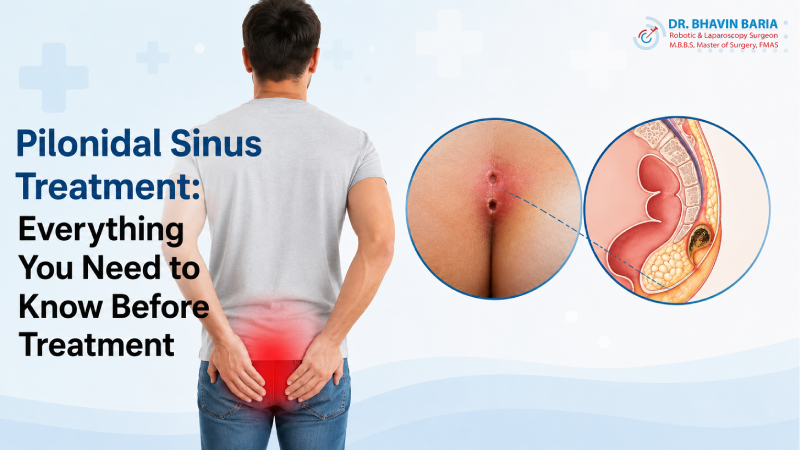
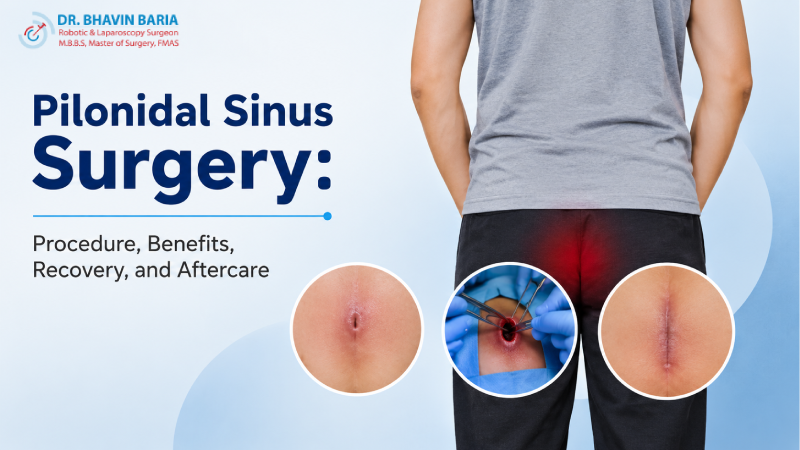
A pilonidal sinus is a tiny skin tube or tunnel that is typically seen in the gap between the buttocks close to the tailbone. Hair and skin debris may collect within the area and contribute to inflammation. If infection develops, the sinus can become painful, swollen, and filled with pus.
Some patients notice a small hole or pit in the skin. Others first become aware of the condition after developing a painful lump or discharge.
Common symptoms include pain near the tailbone, redness, swelling, pus or blood-like discharge, and discomfort while sitting. An abscess may develop from an infected sinus. Fever or feeling unwell can also occur with infection in some cases.
Dr. Bhavin K. Baria evaluates the condition of the sinus, previous infections, and current symptoms before discussing the suitable treatment approach.
When Is Pilonidal Sinus Surgery Considered?
Not every pilonidal sinus requires the same treatment. A sinus without symptoms may be managed differently from a painful abscess or repeatedly infected sinus.
Surgical treatment may be considered when:
- The sinus causes repeated infections
- Pain and swelling keep returning
- Persistent discharge is present
- A chronic sinus tract has developed
- Previous treatment has not provided lasting relief
- The disease is extensive or affects daily comfort
An acute pilonidal abscess commonly requires drainage to release pus and reduce pressure. Further treatment may be considered according to the pattern of the disease and recurrence.
Consulting a Pilonidal Sinus Surgeon in Ahmedabad allows the affected area to be examined properly. Treatment decisions should be based on the actual condition rather than choosing a procedure only because another patient had similar symptoms.
How Is Pilonidal Sinus Surgery Performed?
The exact procedure depends on the extent of the sinus and the surgeon’s clinical assessment. During surgery, the diseased sinus tract and affected tissue may be removed. The wound is then managed according to the selected surgical approach.
Two commonly discussed wound-management approaches are:
1. Open Wound Healing
After the sinus is removed, the wound may be left open to heal naturally. A dressing is placed over or within the wound, and regular dressing care is required.
The wound gradually heals from the deeper area towards the surface. This approach requires commitment to wound care and follow-up.
2. Wound Closure
In selected cases, the surgical wound may be closed with stitches after the affected tissue is removed. The exact closure technique is chosen by the surgeon according to the condition and surgical plan.
Patients should understand that there is no single procedure suitable for every pilonidal sinus. Dr. Bhavin K. Baria discusses the planned approach based on the extent of disease, infection pattern, and individual clinical needs.
What Are the Benefits of Pilonidal Sinus Surgery?
The main purpose of surgery is to treat the diseased sinus that is causing repeated or persistent symptoms. For patients struggling with recurrent infections, ongoing discharge, or painful swelling, surgical treatment may address the underlying sinus tract.
Potential benefits of appropriate surgical treatment include:
- Treatment of the affected sinus tract: Surgery can remove diseased tissue according to the selected procedure.
- Relief from recurrent symptoms: Patients who experience persistent pain, swelling, and discharge may benefit from sinus treatment.
- Chronic disease management: Surgery may be necessary for a persistent sinus that frequently becomes irritated.
- Better everyday comfort: Sitting and daily activities may become more comfortable after recovery from the disease.
- Structured follow-up and wound care: Surgical care includes guidance related to wound healing and postoperative recovery.
The benefits and recovery experience can differ between patients. Before choosing a course of therapy, a consultation with a skilled surgeon is crucial.
What Happens Before Pilonidal Sinus Surgery?
Before surgery, the surgeon examines the affected area and discusses the patient’s symptoms. Patients should mention previous episodes of infection, abscess drainage, discharge, and any earlier pilonidal sinus treatment.
The doctor may also review medical history, current medicines, and other relevant health information. Instructions regarding food, fluids, or medicines before surgery are provided according to the planned procedure and anaesthesia.
This is also the right time to ask questions about the wound, dressing requirements, activity limitations, and follow-up care.
Many patients searching for Pilonidal Sinus Surgery Cost in Ahmedabad are also trying to understand the complete treatment process. Since the surgical approach and clinical requirements can differ from one patient to another, an individual consultation provides more relevant treatment information.
Recovery After Pilonidal Sinus Surgery
Recovery depends largely on the procedure performed and whether the wound is closed or left open. An open wound may require regular dressing changes while it heals naturally. A closed wound requires care according to the surgeon’s instructions and the type of stitches used.
During the early recovery period, patients may experience pain or discomfort around the surgical area. Sitting may feel uncomfortable, particularly during the initial phase of healing.
Patients should gradually return to normal activities according to medical advice. Heavy physical activity or movements that create pressure and friction around the wound may need to be limited during recovery.
Dr. Bhavin K. Baria provides postoperative guidance based on the patient’s procedure and wound condition. Recovery should be approached patiently because wound healing can vary from person to person.
Essential Aftercare Following Surgery
Good aftercare is an important part of pilonidal sinus surgery recovery. The wound is located in an area exposed to movement, pressure, and moisture, so patients need to follow the surgeon’s wound-care instructions carefully.
Important aftercare points may include:
- Keep the wound area clean as advised
- Attend dressing appointments when required
- Take prescribed medicines according to instructions
- Avoid unnecessary pressure on the surgical area
- Resume activities gradually
- Attend scheduled follow-up visits
- Follow hair-management advice if recommended by the surgeon
Patients with an open wound may require regular dressing changes. The exact dressing plan depends on the wound and the surgeon’s instructions.
If increasing redness, swelling, worsening pain, fever, unusual discharge, bleeding, or an unpleasant smell develops, medical advice should be sought. These changes may need assessment rather than home treatment.
Can Pilonidal Sinus Return After Surgery?
It is possible to have recurrence after treating a pilonidal sinus. It could depend on the presentation of the disease, wound healing, hair, and personal factors.
Fulfillment of the doctor’s post-treatment instructions and attendance at follow-up visits can aid in ensuring that the wounds heal properly. The surgeon could recommend appropriate hair care in some instances.
After previous therapy, any new uncomfortable lump, sore, or drainage should not be disregarded. Evaluation can enable one to establish if there has been a recurrence or a new issue associated with the wound.
Pilonidal Sinus Surgeon in Ahmedabad can evaluate the recurrent condition and explain the treatment approach based on previous surgery and the existing state.
Understanding Treatment Planning and Surgical Requirements
Pilonidal Sinus Surgery Cost in Ahmedabad is often a topic searched before scheduling a consultation. But each Pilonidal Sinus Surgery is not the same. Cases such as a simple sinus, recurrent cases, current abscess, and complicated sinus pattern can have their own treatment considerations.
Depending on the type of surgery, the approach to wound care, medical evaluation, and even surgical consideration, the overall process can be different. For this reason, comparisons from the internet will not always be accurate to one’s specific situation.
In considering Pilonidal Sinus Surgery Cost in Ahmedabad, it is important to know the kind of procedure and wound care needed. The most effective way to do this is by having a proper consultation.
How to Prepare for a Smooth Recovery
Prior to surgery, preparation can ease recovery after surgery. The patient should have conversations about the anticipated wound management with his surgeon and know whether dressing assistance might be necessary.
To reduce friction in the surgical area, wear comfortable clothing.Observe the guidelines provided by the medical professionals concerning medications and activities. In case your job involves a lot of sitting, have a discussion with your surgeon before resuming normal activity.
Most importantly, never compare your recovery process with another person’s. There are huge differences between the size of the wound, type of the surgery, and healing process.
Our goal is to provide you with useful advice for recovery based on your particular case.
Why Choose Us
Dr. Bhavin K. Baria offers patient-centered surgery for patients suffering from pilonidal sinus in an effort to make sure that all aspects of diagnosis, surgery planning, and post-surgery instructions are taken into consideration. We know that recurring cases of pain in the coccyx, swelling, and pus in the area can interfere with your everyday life. The whole process starts with an evaluation and a discussion of any infection history you may have experienced before. Dr. Bhavin K. Baria describes the direction of the recommended surgery for each patient individually, rather than using the same approach for everyone.
Conclusion
Surgery for pilonidal sinus may be an option in the event of recurrent infection, chronic drainage, swelling, or pain. Information about the operation, wound management, recovery, and postoperative care will enable better preparation for the treatment process. It is important to develop the correct strategy based on the nature and extent of the disease. Dr. Bhavin K. Baria’s work involves developing patient-centered surgical strategy and postoperative advice. Appropriate wound management, resumption of daily activities slowly, and follow-ups are all essential elements of recovery. Recurrent symptoms may suggest the need for surgical consultation.
Need expert guidance for pilonidal sinus surgery and recovery? Call +91 9978920584 or book your appointment with Dr. Bhavin K. Baria for personalised surgical care.
Frequently Asked Questions
What is the average Pilonidal Sinus Surgery cost in Ahmedabad?
The cost of Pilonidal Sinus Surgery in Ahmedabad can vary depending on the type of procedure, the surgeon’s expertise, and the hospital facilities. It is advisable to schedule a consultation with a surgeon to get a detailed estimate based on your specific condition.
What to expect during Pilonidal Sinus Surgery?
During Pilonidal Sinus Surgery, the surgeon will remove the diseased sinus tract and any affected tissue. The wound may either be left open to heal naturally or closed with stitches, depending on the clinical assessment.
How long does recovery take after Pilonidal Sinus Surgery?
Recovery time after Pilonidal Sinus Surgery varies by procedure type and wound management approach. Typically, patients may take several weeks to heal completely, with most returning to normal activities gradually as advised by their surgeon.
Is there a risk of recurrence after Pilonidal Sinus Surgery?
Yes, there is a possibility of recurrence after Pilonidal Sinus Surgery. Adhering to post-operative care and follow-up appointments can help minimize this risk.
What are important aftercare tips following Pilonidal Sinus Surgery?
Essential aftercare after Pilonidal Sinus Surgery includes keeping the wound clean, attending follow-up appointments, avoiding pressure on the surgical area, and taking prescribed medications. It’s important to monitor for any signs of infection and follow the surgeon’s instructions closely.